
300 French Newspapers vs. Google: What the AI Overviews Complaint Changes for GEO
The Apig federation, representing nearly 300 French newspapers, filed a complaint with France's competition authority claiming Google's AI summaries erode their traffic and break the 2022 compensation commitments. What this means for brands and GEO budgets, with the framework we use at Mintec.
300 French Newspapers vs. Google: What the AI Overviews Complaint Changes for GEO
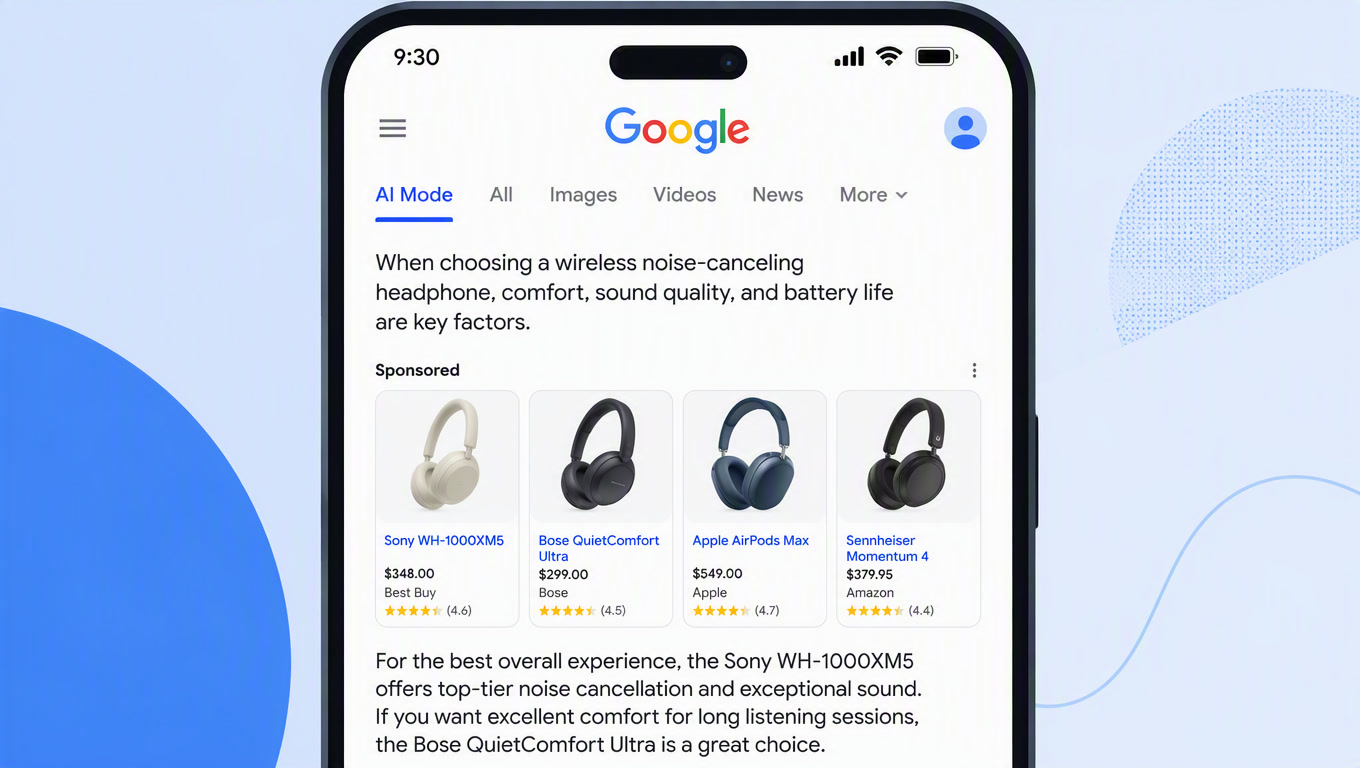
On August 11, 2026, the Apig federation, which represents nearly 300 French newspapers, filed a complaint with France's competition authority over Google's AI-generated search summaries. They want Google to honor the compensation commitments it signed in 2022, and they argue AI Overviews erode traffic to their sites. For a brand, this isn't a fight between third parties. It's the first serious attempt to charge for the currency your GEO strategy runs on: the citation.
What happened
The General Information Press Alliance (Apig) filed the complaint on Tuesday, August 11, according to Le Monde (lemonde.fr) and France 24 (france24.com). The argument has two parts: AI summaries take traffic away from their sites, and that use isn't covered by the commitments Google made in 2022 to the same authority, when it closed the neighboring rights investigation by agreeing to negotiate with French publishers.
Google says the summaries let people ask more complex questions and discover new content, per Courthouse News (courthousenews.com). It's the same answer Google has given since 2023. What's new is the venue: a large group of publishers is taking the fight to the competition authority where Google already lost once in France.
Why this fight is different from 2022
In 2022, the conflict was about snippets and previews in classic search. Google ended up paying, and the model stayed intact. Links still existed, sites still got referral traffic, and the compensation was a patch on a system that worked for both sides.
AI Overviews break that balance. When the answer is generated at the top, the link stops being the product. The user reads, closes the tab, and leaves. We measure this in Search Console, and we documented it in our analysis of AI Overviews traffic and links (ai-overviews-enlaces-trafico-mayo-2026): impressions grow, clicks don't follow, and the page that used to get the visit now only lends its facts.
The French complaint doesn't ask Google to stop summarizing. It asks Google to pay for the material it summarizes. If that works, content stops being free for AI in the largest European market after Germany. And that changes things for brands, even brands that never publish a word of news.
What we see in our reports
At Mintec we run a weekly LLM traffic report. ChatGPT sends us about 18 sessions a week, Claude sends zero, and AI Overviews show up as impressions in the generative AI performance report in Search Console. Small numbers, but with a trait we already measured and published: traffic that arrives from AI answers converts about four times better than classic organic traffic (ai-search-traffic-four-times-conversion-google-2026), because it arrives with purchase intent already resolved.
Translation: a citation is worth more per visit than a classic ranking. The problem is that almost nobody accounts for it. French publishers accounted for theirs as lost traffic. Brands still don't account for theirs as gained traffic, and that asymmetry is what this complaint is going to force everyone to resolve.
Three things to do now, without waiting for a ruling
Measure the value of every citation. Set up the LLM referral segment in GA4 (chatgpt.com, perplexity.ai, gemini.google.com, claude.ai) and the AI performance report in Search Console, then attach a conversion value. Our post on the ROI of cited brands (ia-overviews-ctr-marcas-citadas-roi) shows how we build that calculation with real CTR and conversion data. If you don't know what a citation is worth, you can't decide anything that comes next.
Don't opt out of AI answers. Publishers have the technical option to block AI crawlers, and brands can try it too. It's a mistake for almost all of them. Leaving AI answers doesn't bring back classic rankings. It just removes you from the only place new users find you. We wrote about the gap between citation and ranking (brecha-citacion-geo-ranking-google-ai): some pages rank on Google and don't exist for AI, and vice versa. Opting out is choosing to be invisible in both worlds.
Make your content "licensable." Think about what a publisher would demand before letting an AI use its material: clear authorship, dates, named sources, verifiable data. That's exactly what AI citation already requires. The advantage is double. What makes you citable today makes you attractive for any licensing deal tomorrow. Our framework on trust in AI search (confianza-busqueda-ia-oportunidad-geo) covers the concrete signals AI systems use to decide what to cite.
The bigger picture for non-European markets
For readers outside Europe, this fight has an uncomfortable precedent. Google News shut down in Spain in 2014 over the publisher levy and didn't return until 2022, after the EU copyright directive. The result was a decade without Google News for Spanish readers and a lesson for everyone: publishers can win the legal fight and lose the audience.
Most markets outside Europe don't have an enforcement mechanism equivalent to neighboring rights. If the European model ends up being that AI pays for licensed content, markets without that framework are left out of the deal, and brands there depend even more on being the source AI chooses to cite for free. That's not a catastrophic scenario. It's the one we already live in: competing for citations with real content, first-party data, and direct answers.
My take
The French newspapers are right about the diagnosis and wrong about the remedy. They're right that referral traffic is dying and nobody is compensating them for it. They're wrong if they think charging Google brings the audience back, because the problem isn't that Google doesn't pay. It's that users stopped clicking.
For brands, the conclusion is simpler than it looks. If the publishers win, citations become scarce and expensive, and yours is worth more. If Google wins, nothing changes and we keep competing for citations like before. In both scenarios, the work is the same: be the source AI answers cite. The difference is that there's now a price tag being negotiated for that source, and you want to be on the side that provides it.
For the full picture on measuring and building citations, our GEO measurement framework (geo-traffic-real-numbers-2026) and the citation paradox (paradoja-citacion-ai-overviews) cover both sides: how much a citation brings and why it sometimes hurts.
Frequently Asked Questions
What did the French newspapers ask the competition authority to do?
The Apig federation, representing nearly 300 newspapers, asked the authority to make Google honor the commitments it made in 2022 to compensate French publishers for the use of their content under neighboring rights. They argue AI-generated summaries erode traffic to their sites and fall outside that agreement.
What does the French complaint mean for a brand that isn't a publisher?
It means citation in AI answers is becoming an asset with commercial value. If the publishers win, licensed or compensated content gets priority and citations become scarcer. If Google wins, the system stays as is. In both scenarios, being the source AI answers choose to cite is worth more, not less.
Should brands opt out of AI Overviews?
For most brands, no. Leaving AI answers removes impressions that are often the only way to reach users who no longer click classic results. The real risk isn't being cited without being paid, it's not being cited at all.