Sora's API Dies September 24 and Higgsfield Just Raised $400M — Build Your AI Video Stack With an Exit Plan
OpenAI kills the Sora API on September 24, 2026, and the same week Higgsfield closed a $400M round at a $5.4B valuation with ~$700M in annualized revenue. The #1 risk in AI video production is no longer quality — it's platform dependency. Here's the multi-model stack framework and the migration checklist we use at Mintec, with real project numbers.
OpenAI is shutting down the Sora API on September 24, 2026, and the same week Higgsfield closed a $400M round at a $5.4B valuation with roughly $700M in annualized revenue. The uncomfortable conclusion for agencies and studios: AI video is now a real market, and the #1 production risk is no longer quality — it's platform dependency. If your pipeline generates through a single vendor, you have under six weeks to build an exit plan. This article gives you the multi-model stack framework we use at Mintec and a concrete migration checklist, with real numbers from client work.
Two signals, same week
On August 17, 2026, Higgsfield announced a $400 million Series B at a $5.4 billion valuation, with Goldman Sachs, Intel and DST Global joining as new backers and approximately $700 million in annualized revenue (PRNewswire). The platform reports more than 300 million videos created by creators, brands and agencies — used for pre-production storyboarding, cinematic trailers and photorealistic editorial visuals for fashion and lifestyle brands.
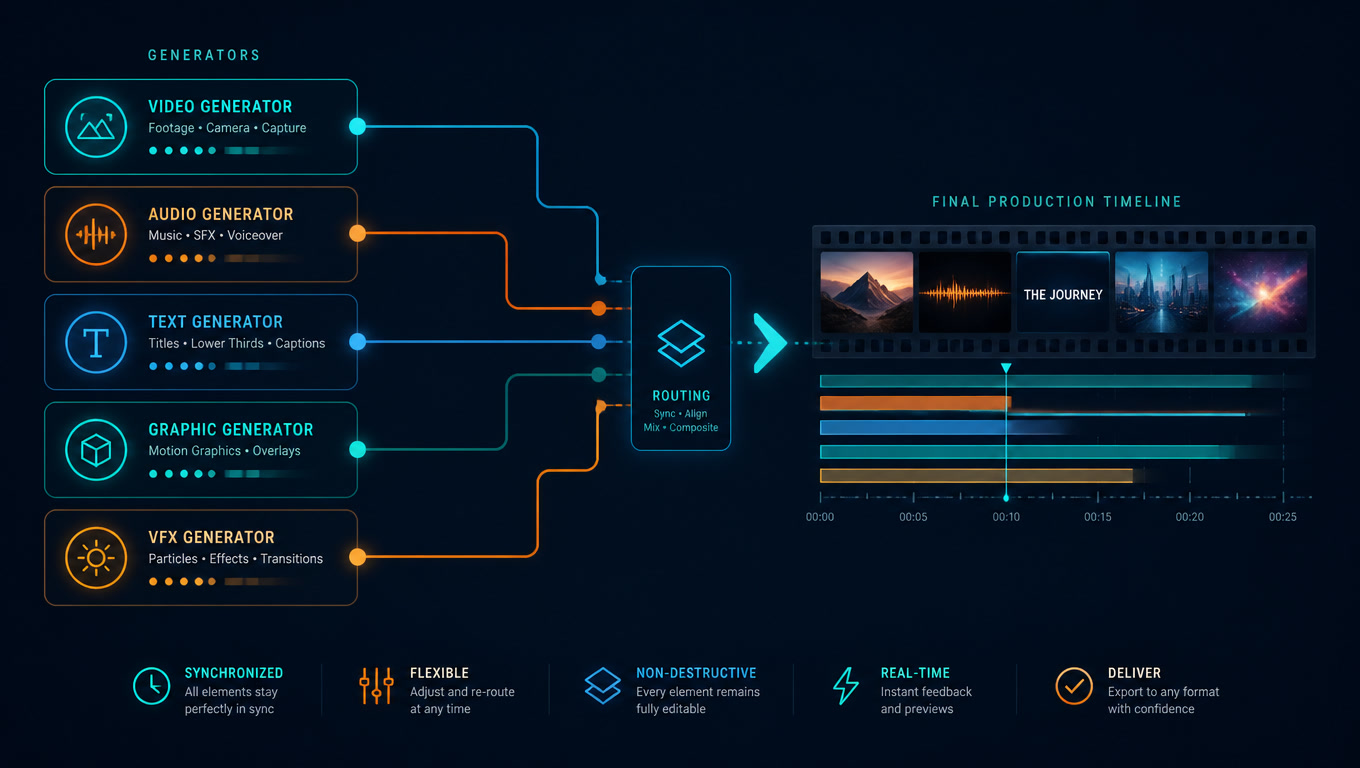
The more revealing detail isn't the money: it's that Higgsfield positions itself as a multi-model workspace — "every top model, one workspace," with Sora, Kling, Veo, Seedance and more behind a single subscription. The market leader capturing real brand and agency budgets isn't betting on one model. It's betting on the layer that orchestrates all of them.
Meanwhile, OpenAI is holding to its shutdown calendar: the Sora app died on April 26, 2026, and the full API (sora-2, sora-2-pro and the Videos API) goes dark on September 24, 2026 (OpenAI Help Center). Anyone who built a pipeline on Sora now has a hard, published, immovable deadline.
The hidden cost of the single model
The architecture mistake in media production isn't picking a "bad" model. It's picking only one. Over the past year we've watched exactly what happens when a vendor changes the rules: prices move quarterly, APIs deprecate, models retire. Sora is the perfect case study — the tool that defined the category is now forcing every production customer to migrate in a matter of weeks.
Our own numbers have confirmed this for a while. On the 90-second corporate video for a retail client that we documented in multi-model AI video production, routing each shot to the right engine (Veo for dialogue, Runway for compositing, Kling for fast iteration) cut cost 35% versus doing everything on Sora, and doubled first-cut client approval. One vendor isn't simpler. It's more expensive and more fragile.
The real per-minute cost map
| Engine | Cost per generated minute | Strength | Dependency risk |
|---|---|---|---|
| Kling 3.0 | $3-6 | Speed, iteration, native 4K | Medium: split regional access |
| Runway Gen-4 | $5-8 | Editing and post-production, per-shot control | Medium-low |
| Veo 3 | $8-12 | Temporal coherence, dialogue and lip-sync | Low: via Google Cloud |
| Gemini Omni Flash | API on AI Plus/Pro/Ultra | Conversational editing, native provenance (SynthID + C2PA) | Low: Google ecosystem |
| Sora 2 | $12-18 | Cinematic aesthetic | Critical: dead 9/24/2026 |
The gap between $3 and $18 per minute isn't quality — it's strategy. And when an engine disappears, the cost isn't just regeneration: it's re-training prompts, re-validating character consistency, re-certifying provenance and re-negotiating contracts. Nobody budgets for that cost because nobody believes their vendor will die. Until it does.
The framework: a multi-model stack with an exit plan
The lesson from Sora isn't "don't use Sora." It's this: every layer of your stack needs an evaluated alternative before you need it. At Mintec we structure AI video production in four layers, and each one has an exit rule:
1. Generation layer (models). Never a single engine for the whole project. Classify the shot (dialogue → Veo; compositing → Runway; fast iteration → Kling; single-take narrative → Seedance 2.5, as we break down in when one-take actually makes sense). Rule: every prompt lives in a library with per-model versions, so switching engines means changing an input, not rewriting the system.
2. Orchestration layer (routing and metadata). Every generation is logged with model, cost, time and prompt version. Routing is optimized on your own data, not press benchmarks. When a vendor changes price or dies, you know exactly which flows to touch and what each alternative costs.
3. Post-production layer (standard, model-agnostic). All footage — regardless of engine — goes through the same color, edit and audio pipeline we documented in the post-processing pipeline. The day you switch engines, 80% of your flow never notices.
4. Delivery layer (packaging and performance). Video is encoded, cached and served with the same rules from our video hosting platform comparison: AV1 where supported, poster + lazy loading, a performance budget. The generating model is irrelevant to the end user.
Migration checklist before September 24
If you depend on the Sora API today, here's what to do now:
- Audit the generation inventory. Document everything calling sora-2 or the Videos API: scripts, prompts, parameters, stored outputs. No inventory, no plan.
- Regenerate the critical assets on the chosen engine. Don't migrate everything: prioritize what's in active campaigns or in the next-60-days pipeline.
- Re-validate consistency and provenance. With EU AI Act Article 50 now enforceable, confirm the new engine emits or allows C2PA marking at generation time. If it doesn't, the marking is on you.
- Recalculate the per-shot economics. Using the table above: if 60% of your shots can move to Kling or Runway, your per-minute cost halves even before you use Veo for the critical stuff.
- Schedule the quarterly re-review. The market changes every 8 weeks. Competitive advantage isn't the model — it's the process for deciding when to switch without panic.
What we'd do at Mintec today
Higgsfield doesn't change our strategy — it confirms it. When the most valuable platform in the market is a model router rather than a model, it's clear the future of production isn't picking the winner. It's building the layer that lets you switch winners without rebuilding the system. That's why multi-model pipelines are no longer an optimization in our projects — they're a design requirement. Open-weight checkpoints like MiniMax H3 add one more layer of protection: if everything closed gets expensive, the self-hosted alternative is already evaluated.
The takeaway is simple: AI video just proved it's a real industry — $700M in revenue and a $5.4B valuation to show for it. And the same week, the category's flagship API announced its own death. If your stack has no exit plan, that deadline isn't Sora's. It's yours.
Frequently Asked Questions
When does the Sora API shut down?
September 24, 2026. OpenAI discontinued the Sora app and website on April 26, 2026, and the API (sora-2 models and the Videos API) stops working on September 24, 2026. Any pipeline depending on it has under six weeks to migrate.
How much does AI video generation cost per API minute in 2026?
Real ranges: Kling 3.0 at $3-6, Runway Gen-4 at $5-8, Veo 3 at $8-12, and Sora 2 at $12-18 per generated minute. With multi-model routing, Mintec projects average $5-10 per minute, and a 60-second video's total cost drops from $96-216 (Sora-only) to $15-50.
Why does Higgsfield's $400M raise matter?
It's the biggest signal yet that AI video is a real market, not a demo: a $5.4B valuation, ~$700M in annualized revenue, and 300+ million videos created on the platform. And the market leader is a multi-model workspace, not a single model — validating the strategy of never depending on one engine.